2026 retirement contribution limits: your September check
Check the 2026 401(k) and IRA limits, age-based catch-ups, and your remaining contribution room with a practical September payroll example.

Dan Faber
September 8, 2026·5 min read·Investing, Retirement
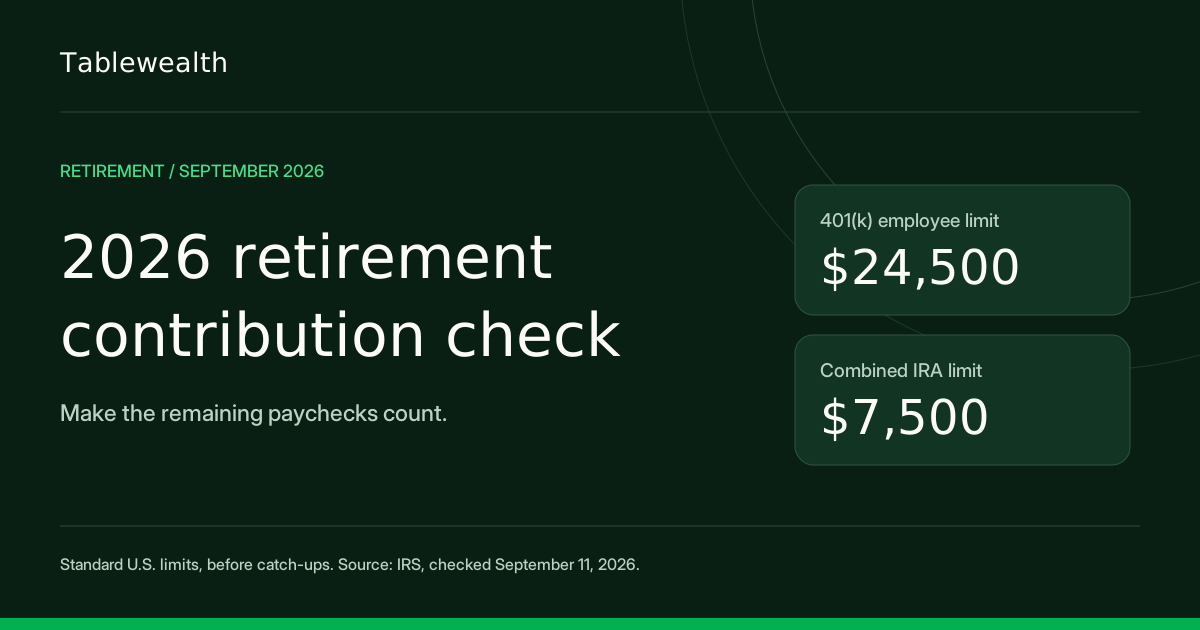
For 2026, the standard employee 401(k) contribution limit is $24,500 and the combined traditional and Roth IRA contribution limit is $7,500, before eligible catch-up contributions. September is a useful time to compare those ceilings with what you have actually contributed: there are still paychecks left to adjust, but the remaining payroll calendar is getting shorter.
Start with your year-to-date contribution records, not your retirement account balance. A rising balance can come from market gains or an employer match. Neither tells you how much of your own annual contribution allowance you have used.
2026 401(k) and IRA contribution limits by age
| Age reached during 2026 | 401(k) employee maximum | Combined IRA maximum |
|---|---|---|
| Under 50 | $24,500 | $7,500 |
| 50–59 | $32,500 | $8,600 |
| 60–63 | $35,750 | $8,600 |
| 64 or older | $32,500 | $8,600 |
The IRS announcement of 2026 limits sets the regular 401(k) catch-up at $8,000 and the age-60-through-63 catch-up at $11,250. The higher amount replaces the regular catch-up; you do not add both. The IRA catch-up is $1,100.
Calculate what each remaining paycheck would need to contribute
Use this worksheet: remaining employee contribution room = applicable annual employee limit minus year-to-date employee deferrals. Then divide your chosen remaining contribution goal by the number of paychecks on which a new election can actually take effect. Payroll processing delays matter more than the number of months left on the calendar.
The maximum is a ceiling, not a required savings target. If $1,062.50 per paycheck would leave the household short for bills, choose a contribution goal that fits available cash flow. A retirement contribution plan should include the cash that needs to stay accessible this year.
- Confirm the last payroll date for an election change and how quickly a new percentage takes effect.
- Include employee deferrals from a previous employer when checking the annual limit. A new payroll system may not know about them.
- Separate employee contributions from employer contributions and investment gains.
- Ask how the plan calculates its match each pay period and whether it reconciles missed matching contributions at year end.
- Recheck the next pay statement after making a change instead of assuming the election was applied.
For the distinction between employee deferrals and employer contributions, see the IRS guide to retirement plan contributions. Your plan administrator can explain the matching formula and payroll rules for your plan.
Check the 2026 Roth rule before increasing catch-ups
The IRS catch-up contribution guidance says that, beginning in 2026, participants in plans with Roth features offering catch-ups must make those catch-ups on a Roth basis if their prior-year wages with the plan sponsor exceeded $150,000. Confirm how this applies with your plan administrator; the test concerns prior-year wages with that employer, not simply household income.
Keep the regular employee deferral and the catch-up portion separate in your worksheet. A rule affecting the tax treatment of catch-up dollars is not a reason to assume every dollar going into the plan must use the same tax treatment.
IRA contribution room and IRA eligibility are different checks
The IRS IRA contribution rules apply one annual limit across your traditional and Roth IRAs, subject to taxable compensation. Roth eligibility also depends on modified adjusted gross income and filing status. A traditional IRA contribution is not automatically deductible just because it is allowed.
IRA contributions generally can be made until the tax return filing deadline, excluding extensions, as explained in the IRS overview of individual retirement arrangements. Do not assume a workplace salary deferral follows the same calendar. When contributing to an IRA early next year, confirm which tax year the custodian records.
Finish with a contribution plan you can actually follow
Write down four numbers for each account: the applicable limit, contributions already made, your remaining goal, and the amount per remaining paycheck or transfer. Save the records behind them. Keep rollovers in a separate column so a transfer of existing retirement money does not look like new saving.
Once the annual contribution amount is realistic, use the Tablewealth retirement calculator to explore how different savings levels change a long-term projection. Check contribution eligibility against payroll and custodian records; a net worth balance alone cannot establish it. This article provides general U.S. retirement and tax information, checked September 11, 2026.
Related calculators