Keep the spreadsheet, add a workbook console
Sync Google Sheets or Excel while managing workbook accounts, transactions, categories, rules, archives, and sync health from the app.
Tiller vs Tablewealth
Tiller is excellent if your personal finance system should live in Google Sheets or Excel. Tablewealth is for people who want that spreadsheet control plus a native app, installable finance apps, private assets, API access, and AI workflows on the same connected data.
Why people choose Tablewealth over Tiller
Sync Google Sheets or Excel while managing workbook accounts, transactions, categories, rules, archives, and sync health from the app.
Use MCP and agent workflows to turn connected financial data into private dashboards, reports, and focused apps.
Bring brokerage holdings, cash positions, manual assets, real estate, and AngelList portfolio exports into one workspace.
Use built-in dashboards, install apps, sync workbooks, call the API, or build your own finance app.
Detailed comparison
| Decision point |  Tablewealth Tablewealth | |
|---|---|---|
| Core product | A financial operating system: use the native app, install apps, sync spreadsheets, or build your own tools on live data. | A spreadsheet-first personal finance system that typically feeds banking transactions and balances into Google Sheets or Excel once a day. |
| Best for | Spreadsheet fans who also want a native app, installable tools, private assets, API access, and AI workflows. | People who want their personal finance workflow to live primarily in a spreadsheet. |
| Trial | 14-day free trial, then $99/year to sync to spreadsheets, use the app, try the app store, or build your own apps. | 30-day free trial, then $99/year to sync data to spreadsheets. |
| Live Google/Excel data sync | Live Google Sheets and Excel sync for accounts, holdings, transactions, templates, workbook consoles, and latest values. | Core product: bank, credit card, and loan feeds into Google Sheets and Microsoft Excel, usually on a daily refresh cycle. |
| Spreadsheet templates | Templates for net worth, budgeting, household planning, and live transaction exports. | Foundation Template plus community and specialty spreadsheet templates. |
| Daily digest | Sends a weekly digest email covering changes to net worth and major income/expenses. | Hello, Money sends a daily email summary of balances and transactions. |
| Native app and mobile cleanup | Use Tablewealth's app to review transactions, add manual transactions, manage tags, run auto-categorization, sync workbooks, try app store apps, or build your own app. | The new Console adds mobile-friendly transaction editing and app-side AutoCat for supported Google Sheets workflows. |
| Workbook archives and account cleanup | Archive old workbook links and individual accounts without deleting historical records. | Users have requested archived spreadsheet links and account-level archive or mute controls. |
| Sync diagnostics | Separates source refresh, workbook sync state, last success, next scheduled sync, and last error. | Console users have reported confusion around Refresh Accounts timing and disabled refresh states. |
| Build your own app with AI | Use API, MCP, and AI Agent workflows to build finance apps without rebuilding bank and brokerage connections. | Spreadsheet formulas and templates are flexible, but Tiller is not an app-building platform. |
| Brokerage holdings | Read live investment holdings and cash-equivalent positions through the dashboard, spreadsheet sync, and API. | Does not connect brokerage accounts. Investment holdings need manual workbook modeling or separate imports outside Tiller feeds. |
| Private market investments | Built to ingest AngelList portfolio exports alongside connected accounts, holdings, and manual assets. | Manual spreadsheet tracking for private investments. |
| Developer API | Read-only API for organization metadata, accounts, transactions, holdings, API key discovery, and account-scoped access. | Not the primary product surface. |
| Setup help | Real-time account syncing, about 15 minutes for core setup, and specialist help for custom categories and rules with a 2-hour response target. | Self-serve spreadsheet setup with templates, documentation, and community support. |
| Choose it when | You want more than a spreadsheet. | You just want a spreadsheet. |
Reviewed July 7, 2026. Competitor pricing and product packaging can change; verify current details before buying.
Try Tablewealth
Connect accounts once, then use Tablewealth as your dashboard, live spreadsheet source, app store, API, or AI-ready financial data layer.
Why people switch
You already trust your own workbook. Tablewealth keeps it fed with live financial data while giving you a native workspace around it.
Brokerage holdings, cash-equivalent positions, private assets, and account-level context belong beside spending and cash flow.
Use the API, MCP, and agent app builder to create the exact financial app you need without wiring every bank connection yourself.
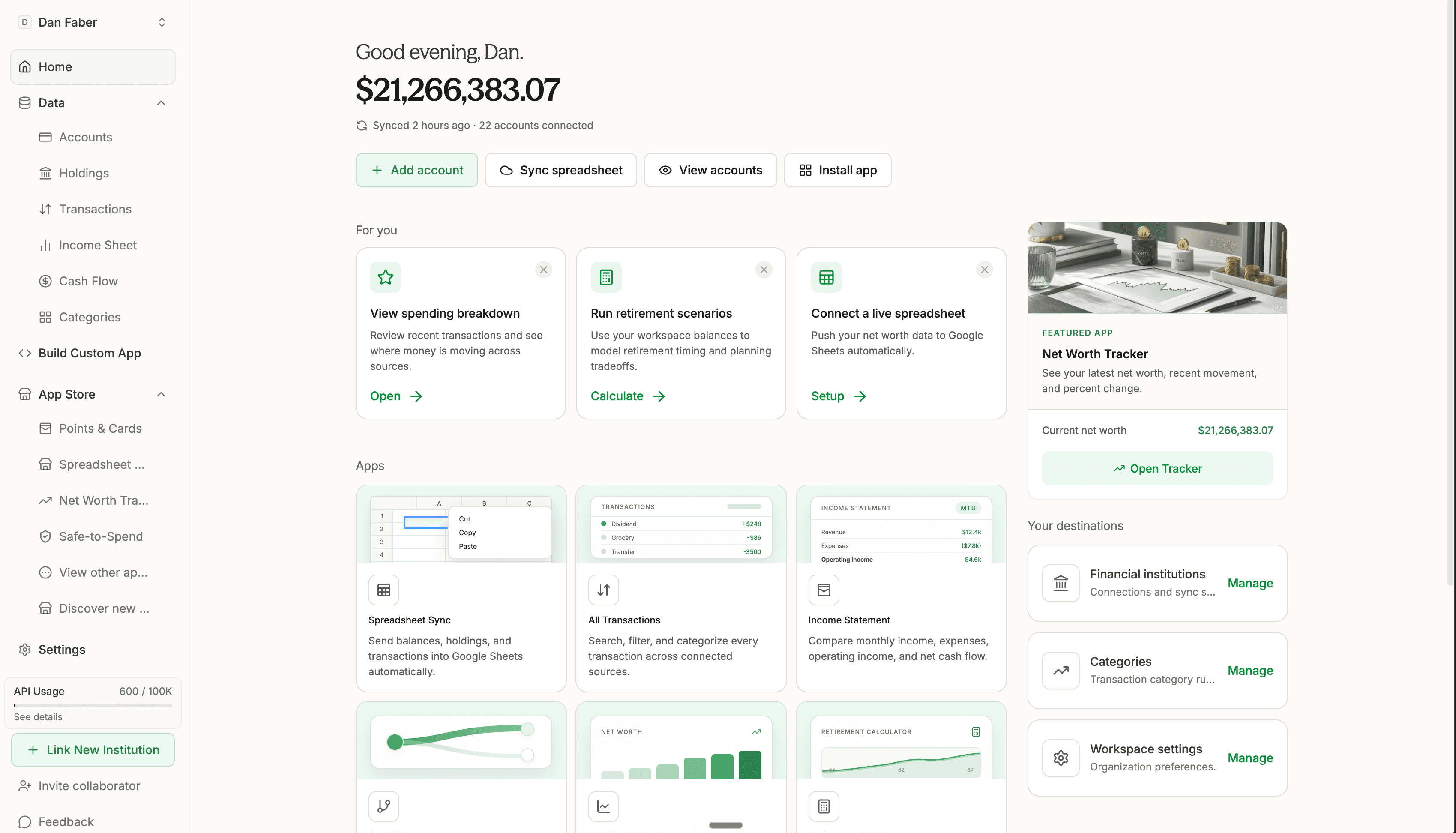
Home base
Start from connected accounts, then decide what belongs on top: dashboards, apps, spreadsheets, reports, rules, and custom workflows. Tablewealth is not trying to make every user fit the same view.
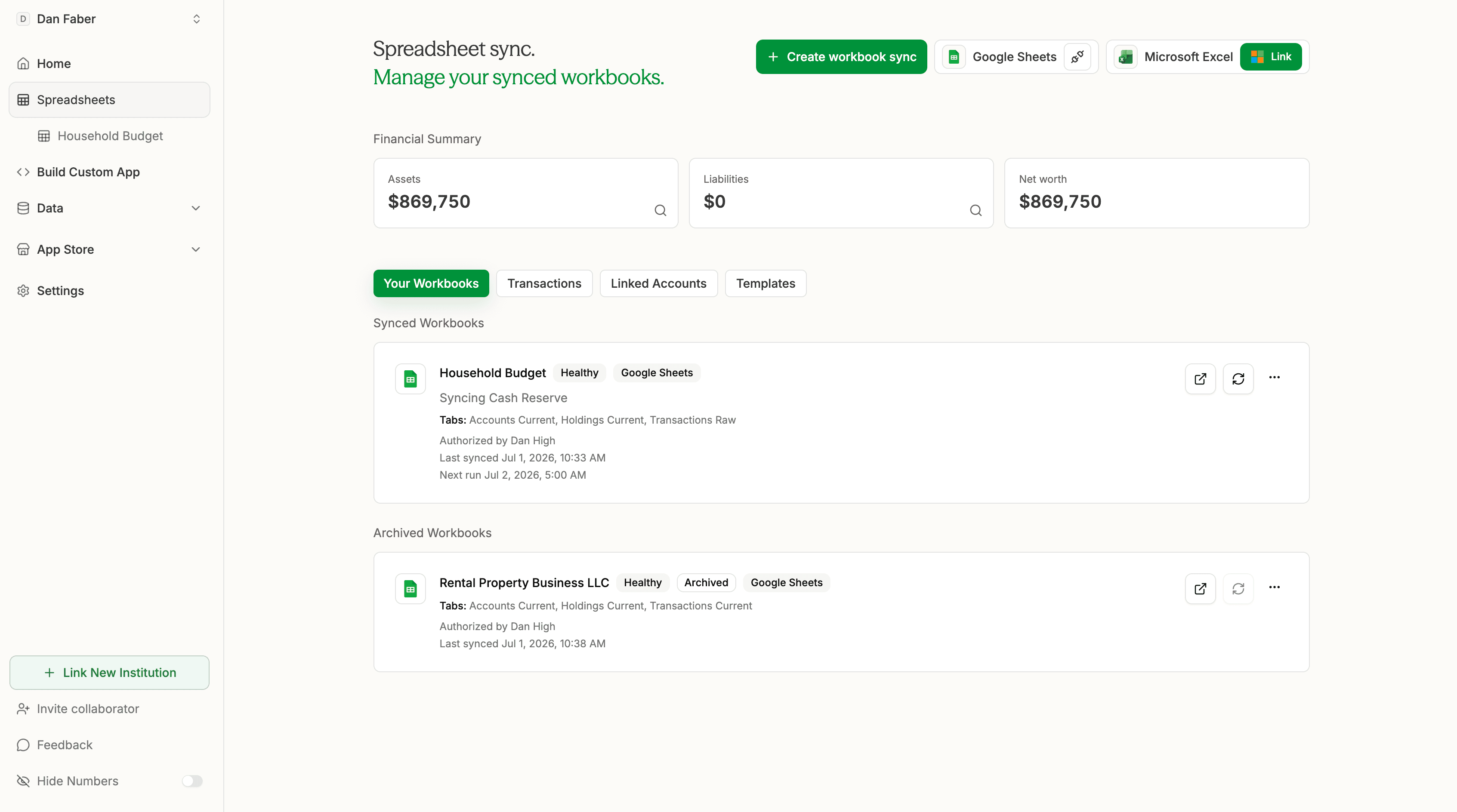
Spreadsheet sync
Connect Google Sheets or Excel, choose a workbook template, and keep accounts, holdings, and transactions synced without rebuilding exports by hand.
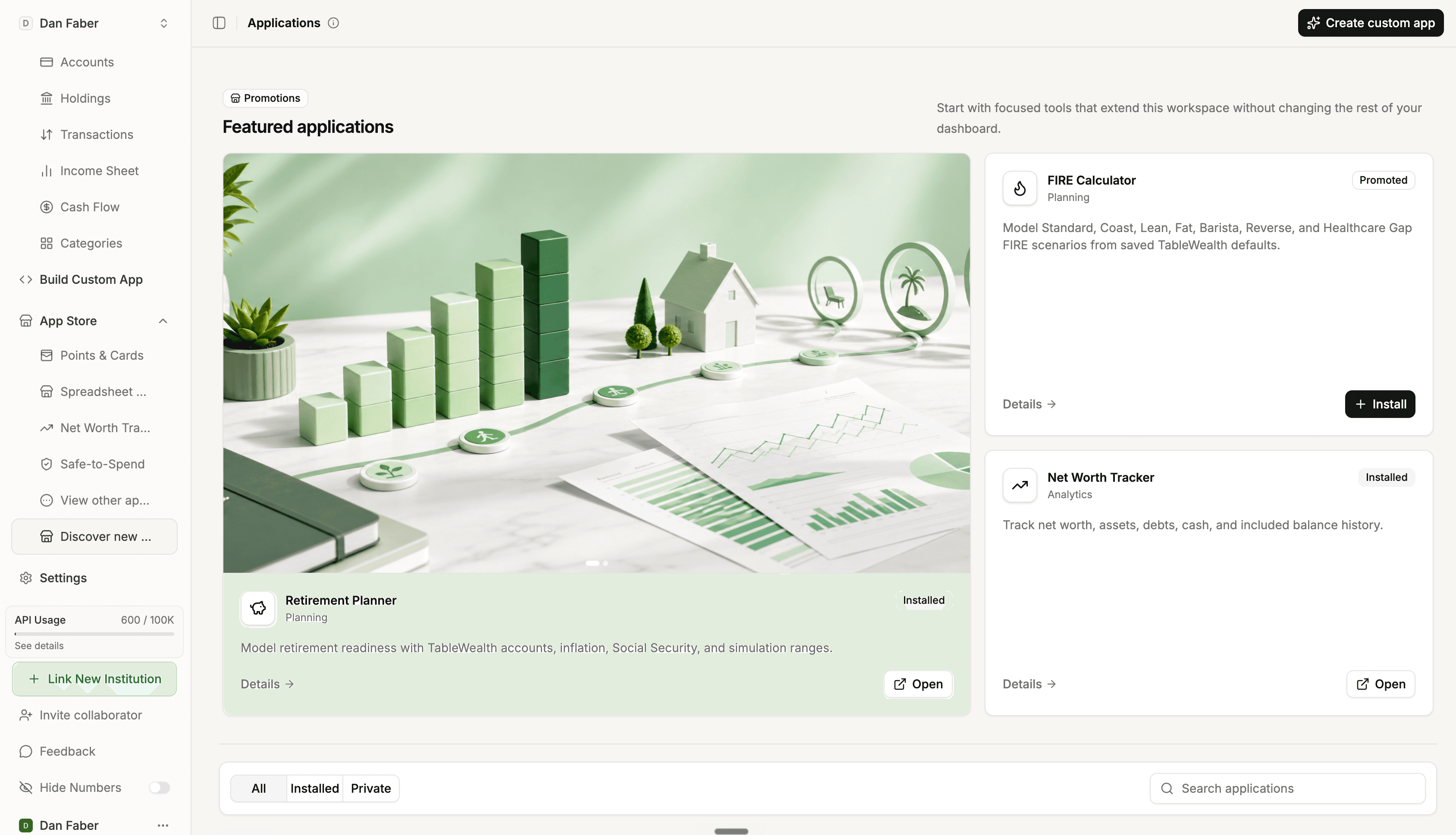
App layer
Install apps for planning, net worth, cash flow, and analysis. Build private apps when the exact tool you need does not exist yet.
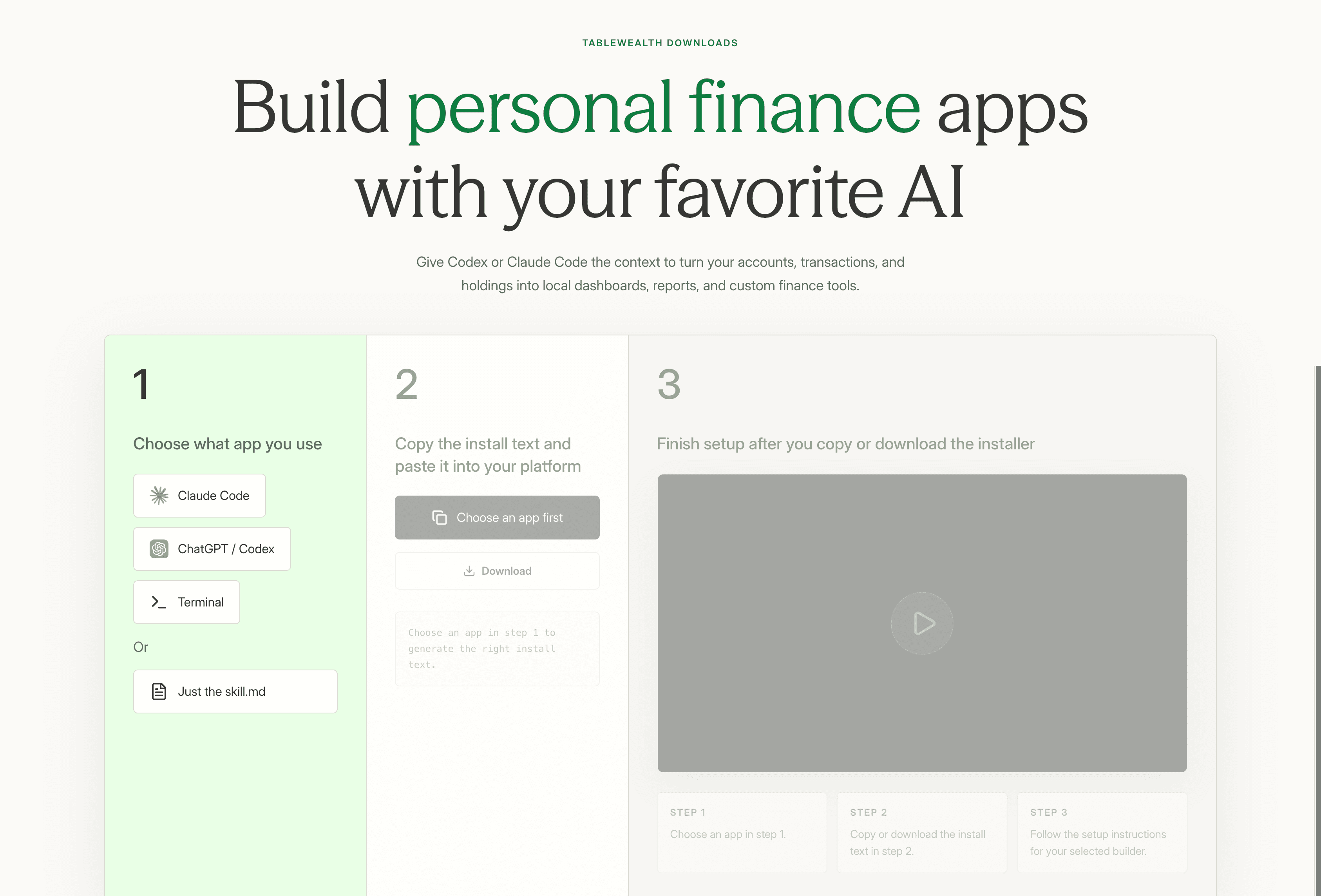
AI setup
Tablewealth gives your AI builder the setup path: choose Codex, Claude Code, Terminal, or the raw skill, then copy the install prompt or download the plugin. The point is simple: your AI can build finance apps without you rebuilding account, holdings, and transaction plumbing.
Agent builder
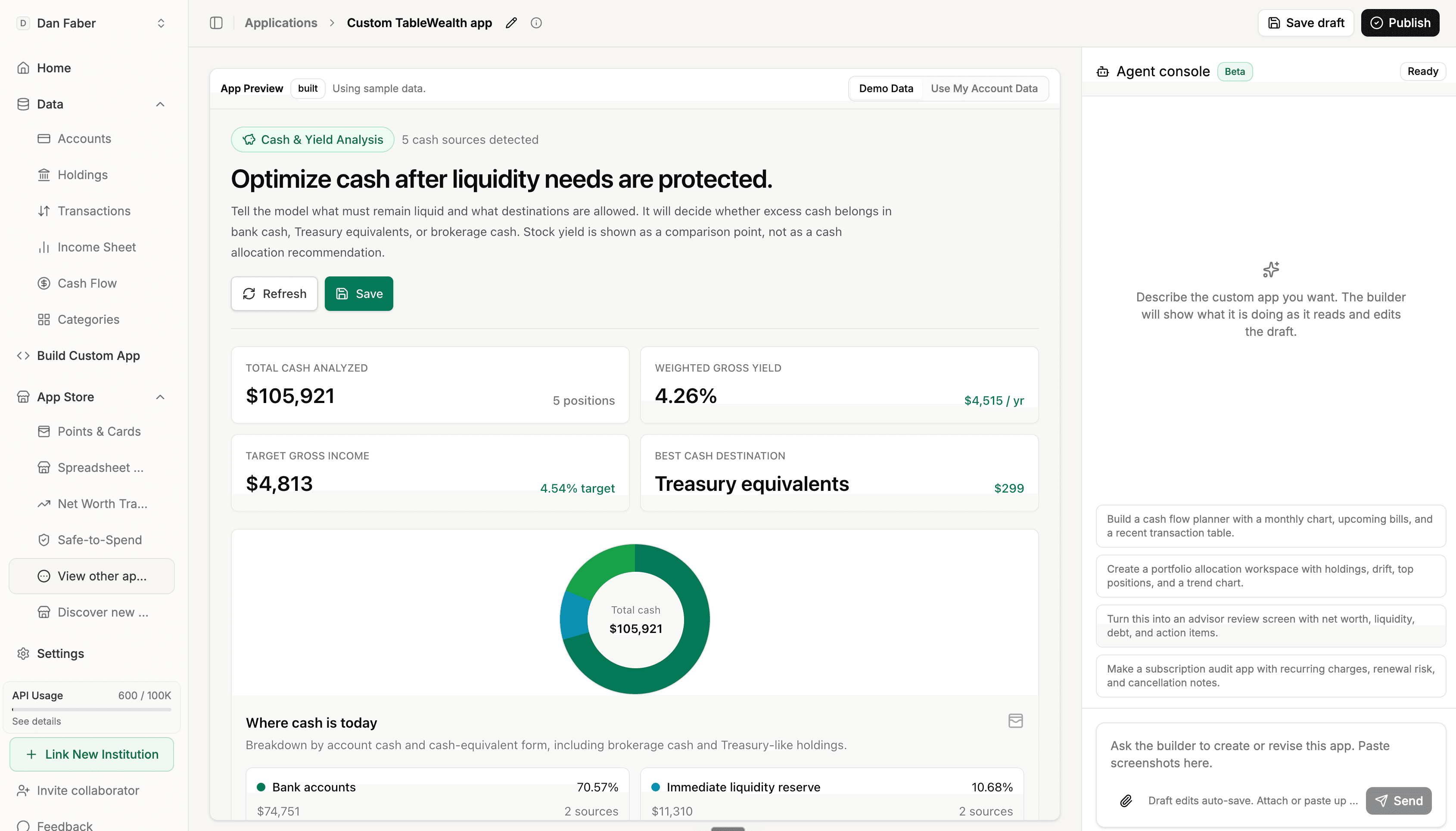
Use agent-assisted app building on top of live Tablewealth data. Ask for a cash analysis screen, portfolio workspace, advisor review, or subscription audit without starting from raw bank connectors.
Switch from Tiller
Connect accounts, turn on spreadsheet sync, and start with one focused workflow. Use the 14-day trial to test the dashboard, spreadsheet sync, app store, and custom app builder before committing.
Link bank, credit, loan, and brokerage accounts. Core setup should take about 15 minutes for most users.
Account syncing is real-time, and workbook sync keeps selected spreadsheet data up to date.
Use the dashboard, install an app, sync a workbook, or start a custom app from a focused template.
If you want help with custom categories, rules, or onboarding, support specialists can help with a 2-hour response target.
Value
TablewealthSources
Product information reviewed on July 7, 2026.
Tiller is a trademark of Tiller Money, LLC. This comparison is based on publicly available information and Tablewealth product capabilities as of July 7, 2026. Tablewealth is not affiliated with, sponsored by, or endorsed by Tiller Money, LLC.
FAQ
Choose Tablewealth when you want spreadsheet control without making the spreadsheet carry the whole system: native dashboards, live Google Sheets and Excel sync, installable apps, private assets, API access, and AI-built workflows on top of connected accounts.
Tiller is a strong choice if you want your personal finance system to live primarily in Google Sheets or Excel. It is especially natural for people who already trust their own workbook and want typically daily transaction feeds, templates, and a daily email digest.
Tiller’s newer Console makes mobile transaction editing and app-side AutoCat more prominent. Tablewealth is designed to go further with workbook consoles, app-side auto-categorization runs, transaction tags, manual transaction creation, account archives, Excel sync, dashboards, apps, API access, and sync diagnostics around the spreadsheet.
It can, but it does not have to. Tablewealth can keep your existing Google Sheets or Excel workflow alive with live account, holding, transaction, template, and latest-value sync.
Yes, but the more interesting answer is that Tablewealth lets you build your own Mint. You can use the native app, install focused apps, sync a live spreadsheet, or build private dashboards and workflows on top of your financial data.
Tiller can track anything you model manually in a spreadsheet, but it does not connect brokerage accounts or pull investment holdings. Tablewealth is built to ingest AngelList portfolio exports alongside connected accounts, brokerage holdings, manual assets, and real estate, so private investments can live in the same workspace.
Most users can connect accounts and start syncing in about 15 minutes. The trial is 14 days, and support specialists can help with categories, rules, or custom workspace setup with a 2-hour response target.